
Wars since 1945

An incomplete list of post-1945 wars which involved one country attacking another country.

1946-1954 The French Indochina War in Vietnam
1948-1949 Arab-Israeli War
1950-1953 Korean War
1953 Soviet invasion of East Germany
1955-1975 US war in Vietnam
1956 Soviet suppression of the Hungarian revolt
1956 Suez War
1958-1959 North Vietnamese invasion of Laos
1958-1959 Mexico-Guatemala war
1959 Chinese suppression of the Tibetan uprising
1959 Cuban invasion of Panama
1959 Cuban invasion of the Dominican Republic
1961 US invasion of Cuba (Bay of Pigs)
1961-1962 French Algerian War
1961 Indian annexation of Goa
1962 Sino-Indian War
1963 Cuban invasion of Venezuela
1965-1966 USA invasion of Dominican Republic
1965 Indo-Pakistan War
1967 Israel-Arab War
1968 Invasion of Czechoslovakia by Soviet forces
1971 Bangladesh war of independence
1972 Invasion of Uganda
1973 Israeli-Arab War
1974-1975 Iraqi-Kurdish War
1974 Turkish invasion of Cyprus
1975-1976 Indonesian invasion of East Timor
1977 Egypt-Libya War
1978 Israeli invasion of Lebanon
1978-1979 Uganda-Tanzania War
1979-1989 Soviet invasion of Afghanistan
1980-1988 Iran-Iraq War
1982 Falklands War
1982 Israeli invasion of Lebanon
1983 USA invasion of Grenada
1986 USA bombing of Libya
1988-1994 First Nagorno-Karabakh war
1988 Indian intervention in the Sr- Lankan Civil War
1989-1990 USA invasion of Panama
1990-1991 First Gulf War
1990-1992 Transnistria War
1991-1992 South Ossetia War
1991-1995 Yugoslav Wars
1992-1995 Bosnian War
1994-1996 First Chechen War
1998- Saudi-Yemeni border dispute
1999-2009 Second Chechen War
2001-2021 USA invasion of Afghanistan

And an incomplete list of conflicts in which a foreign power sought to increase its influence and benefit from a conflict by supporting violence and civil war in another country.

1953 Overthrow of the Iranian democratic government by the USA and UK
1954-1962 French war in Algeria
1955-1959 Cyprus rebellion against British rule
1960-1965 Congo War
1961-1964 Angolan War of Independence
1961-1970 First Iraq-Kurdish War
1963-1998 The Troubles (Northern Ireland)
1973 Chilean coup d’etat
1974-1983 The ‘Dirty War’ of Argentina
Debunking – international law

There is no such thing as international law. It is a myth. It is a fiction created by the capitalist class to cloak its exercise of naked ambition.

A law, as most people understand it, is a rule which is enforced by a state. For so called international law there is no international enforcement authority. The United Nations is not a state and it has no independent enforcement powers. It is a diplomatic congress. Its members are not bound by its edicts, and it is incapable of issuing any edicts which are not unanimously agreed by every member of the Security Council. The UN cannot enforce a rule that one country must not encroach on the sovereignty of another country. The number of encroachments on national sovereignty that have occurred since the establishment of the UN proves this.

A brief internet search for wars since 1945 reveals dozens of such conflicts.

Recent conflicts have illustrated the myth of international law.

When Iraq invaded Iran in 1980 it started an 8-year conflict that caused over a million casualties and approximately 500,000 deaths. Throughout the conflict the aggressor, Iraq, was supported and supplied by the USA, Russia, France and other countries. They all turned a blind eye to the use of chemical weapons against Iran. The rule of international law was no obstacle when the strategic interests of those countries was at stake.

The 2003 invasion of Iraq by the USA and the UK was another example of imperialist interests taking precedence over the international law which both countries professed to uphold. When the interests of their national capitalist class were at stake, the CIA and MI6 propaganda machines went into overdrive to emphasise the brutality of the Iraqi regime. The same regime whose brutality they had sponsored for 8 years.

International law, when it is discussed by the chattering classes, is actually no more than a series of treaties and agreements between countries. And like any treaty, it is not worth the paper it is written on. Treaties are agreed, and then treaties are broken. A treaty is no more than an agreement between two or more countries. And treaties continue to be in force for as long as the parties to that treaty want them to be in force.

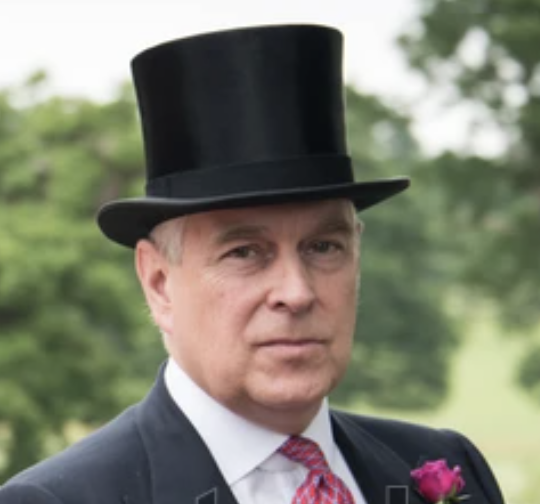
When Andrew (Batty-Mount) Windsor sold his little house

prince andrew (former)

The BBC are reporting they have revealed a shocking truth about the disgraceful Royal. Some of the money which he got when he sold his little house might have come from a corrupt source. The truth is much simpler.

When the Queen’s favourite son (you know, the one who likes hob-knobbing with a convicted paedophile ) married Sarah Ferguson, he was given a cosy little multi-million pound mansion by his mum. Then when his sweet little old granny kicked the bucket, he moved into her gaff and put his own little place up for sale.

Asking price? £12 million. But there were no takers. Probably because it was overpriced.

Yet, a few years later, a billionaire businessman from Kazakhstan took it off his hands for a mere £15 million. According to the BBC, probably close to double its market value.

For the BBC, the scandal is Andrew’s Kazak buddy. Timur Kolabayev is the son-in-law of the dictatorial ruler of Kazakhstan. And he got to be a billionaire oligarch in the same way they all did — by cashing in on the corrupt sell-off of national assets for a fraction of their real value. Kolabayev’s corruption is not so much his association with a company being investigated for bribery, as his involvement of the rip-off of Kazakhstan;s wealth for private profit.

Back in the UK, the corruption at the hear of British society, has been obvious for decades. It is not the inflated price Andrew received a mansion that cost him nothing to acquire. We don’t need the BBC to investigate what mutual back-scratching was involved in that deal. The corruption that lies at the heart io British capitalist society is the obscene level of unearned wealth floating around the aristocracy and the finance capitalists of the City of London.

The BBC’s ‘revelation’ shines the spotlight somwhere the BBC chooses not to go. It exposes, once again, the chasm that separates working people from the ruling class. And it serves to remind us we have our own oligarchy here in Britain.

#whattheysaid – Yasmin Alibhai Brown on parliamentary democracy

‘I am really proud of the parliamentarians. Some of them have taken a great risk, knowing that their own constituents are against some of what they voted for in parliament. And that’s what our system is about.’

Yasmin Alibhai Brown speaking on The Papers (BBC News channel)

Yasmin Alibhai Brown is really proud MP’s are working to overturn the referendum result.

She realises that many constituencies voted to Leave the EU. She also implicitly concedes ‘in many cases’ the majority of those constituents still believe that the UK should leave the EU. But Ms Alibhai Brown is proud of those MP’s who are consciously working to thwart the wishes of those electors. ‘And that’s what our system is all about.’

The truth has been laid bare, to many people, that bourgeois democracy (so-called ‘parliamentary democracy’) is about a small cabal of 650 people making decisions about the future of the country, and over-riding the will of the people.

One of the gains of the political process over the last 3 years has been to lay bare the truth – that ‘parliamentary democracy’ is in fact bourgeois democracy, and is merely a facade covering what Marxists have always termed the dictatorship of the bourgeoisie. Those who hold the real power in society, those who control the money, financial institutions, media etc. are the ones who exercise power in practice.

Hard working MP’s

Conservative MP Philip Davies was asked on The Daily Politics today how many MP’s would be present for the vote on giving 16-year-olds the vote in the EU referendum. Has answer was: “There’s no votes today and lots on MP’s go back to their constituencies early.” I checked my calendar, and today is Thursday. So that means these hard working MP’s have put in nearly three days of hard graft at the coalface of Westminster politics before starting their weekends.

Remember that when they bleat about how hard working they are. Bless.

What I read today…

“Capitalism has always been progressive, something Voltaire noticed in the London Stock Exchange of the 18th century, where he saw Christians, Jews and Muslims trading together.”

Ed West. Evening Standard

Sorry Ed, capitalists trading together is not progressive. All that tells you is that capitalists stick together. They are a class, and as such they have more in common with each other, whatever their religious beliefs, than they do with the working class of the same religion.

The same goes for us – whatever our country of origin, colour, creed, gender or other characteristic, we are, first and foremost, workers. And we have more in common with our own class from anywhere in the world than we have with the ruling class of our home country.


Euphemisms

When the Tories and Lib-Dems say “difficult decisions” they mean cuts. Cuts.

They would rather use six syllables because cuts is the C-word in politics.

So when they use the euphemism we should call them (the politicians) “difficult deNcisions” – its like Cuts, but with an extra N.

Poor Harry

HarryPoor Harry Windsor. To support an AIDS charity he was asked to reveal a secret. His big secret is that he gets nervous before speaking in public. Well, here’s an idea: get a proper job. Not one where you have the money and the resources to live a playboy lifestyle, just a plain ordinary job. There are millions of people who do not have to worry about “speaking in public” because they are doing ordinary jobs, living on normal incomes. Join the masses, Harry. Save yourself all that stress.

P.S. How many major sporting events have you had front seats for, in the last 5 years? And how much did you pay for them?

P.P.S. Parasite.